
Blog

Maximizing Efficiency and Comfort Part 2

May 17th, 2012

Getting the most out of your Heating and Cooling System

Inside

Set the thermostat at the highest comfortable level in the summer and the lowest comfortable level in the winter. A change in one degree changes energy consumption by about 4%. Humidifiers and dehumidifiers can make a huge difference in how the temperature feels.

Install a programmable thermostat. It will automatically adjust the temperature at night or when you’re not going to be home for a long period of time.

Lights are a source of indoor heat, a problem in the summer. Wherever possible, replace incandescent bulbs and fixtures with compact fluorescents. They use a lot less energy, produce less heat, and last longer. Today’s fluorescents aren’t like those of only a few years ago- you can choose a warm, yellow light similar to incandescent light. You can use them in table lamps, ceiling fixtures (including ceiling fan fixtures), torchieres, and for indoor and outdoor lighting. Some can be used with dimmer switches, too. Avoid halogen lamps. The light is clear and bright, but they create a lot of heat.

In the summer, keep drapes and blinds closed on the sunny side of the house during the day. In the winter, open them to take advantage of solar heat but close them at night to help block cold air (even if you have insulated windows.)

Insulate attics, crawl spaces, basements, and walls to the R value recommended for you area. Your HVAC contractor can tell you how much you need. Don’t forget to insulate duct work in un-conditioned space.

Use a gas fireplace or put glass doors on a wood-burning fireplace. (Be sure to check with the manufacturer first- some small fireboxes with zero-clearance flues cannot be outfitted with glass doors.) Keep the damper closed whenever you’re not using the fireplace.

In the summer, do household chores during the coolest part of the day if you can. Cooking, laundry, washing dishes, and heavier work such as vacuuming are examples. Check to see if you electric utility offers time-of-day pricing. That could save you even more money.

Tips for Maximum Efficency and Comfort

May 16th, 2012

How to Help your Heating & Cooling System max-out its Efficiency!

Whether your comfort system is old or new, in a new or old home, in an apartment or a single-family home, there are  many little things you can do to optimize its efficiency and minimize your utility bills. They’re definitely worth the small amount of time and expense they take, because in the long run, they’ll save you money.


Whatever the season, you want to keep your comfortable air inside the house. That means caulking and weather stripping doors and windows, around chimneys and flues, and anywhere else inside air can escape. Be sure to check for cracked or broken shingles, crumbling grout, and worn or torn vapor barriers, too.


This is part 1 of a 2 part series. We will start with the area outside your home.


Outside

Inspect the exterior of your home once or twice a year. A good way to remember is to do it when you have your regular, professional HVAC check-up because heating and cooling will be on your mid anyway.


If you’re building a new home or replacing windows, invest in vinyl-or wood-clad insulated (thermopane) windows and storm windows and doors. Then keep them closed whenever the heat or air conditioning is on!


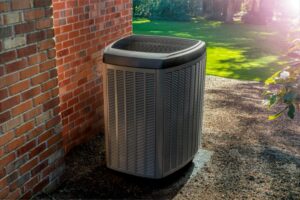
Keep vegetation and debris well away from the outdoor cooling unit of your system. They can block air flow, which forces the system to work harder to produce the same level of comfort. You’ll spend more now… and in a few years, when the equipment fails prematurely and you have to replace it.


However, use vegetation to keep you home cooler in summer and warmer in winter. For example, plant a row of trees on the side of your home the wind usually comes from. They’ll act as wind blocks. Because deciduous trees lose their leaes in the winter, they’ll let in the sun’s light and warmth in winter; in the summer, they provide cooling shade.

Do, however, be careful about how close you plant anything to the house, and tak into account that trees and shrubs grow. They can block light, and in some areas of the country become highways for such pests. A local landscape architect, reputable garden center, or the state or county extension agency can help with plat selection and placement.

Preventative Maintenance = Savings! (and more comfort)

May 4th, 2012

Preventative Maintenance for your Air Conditioner, Heat Pump, Furnace and Air Handler

Preventive maintenance agreements (PMAs) are agreements between you and your ACCA quality contractor for scheduled inspections and maintenance of your heating, ventilation, and air conditioning (HVAC) system.

PMAs are generally scheduled semi-annually to maintain peak efficiency, prevent utility overpayment, and avert system failures through predictive maintenance that can help extend the life of your HVAC system. Sometimes PMAs are also referred to as “planned maintenance agreements,” “start and checks,” or “preventative service agreements.” PMAs usually consist of fall and spring scheduled sessions for an ACCA-member service technician to go through your entire HVAC system preparing it for the upcoming season in a proactive approach before system failure andprior to overpaying your utility company.

Energy Consumption

The HVAC system is most likely the single biggest use of energy in your home. In commercial applications where refrigeration is applied (combined with the HVAC systems), huge amounts of energy are used in the building. In fact, over 1/3 rd of the energy used in the United States is used to heat and cool buildings.

According to the Consortium of Energy Efficiency (CEE) up to 50% more energy can be saved with proper installation, sizing, andmaintenance of commercial central air conditioning and heat pumps. “Although the CEE study did not measure residential systems, a compelling case can be made that proper maintenance can save homeowners up to 50% as well,” according to Larry Taylor, President of Air Rite A/C Company, Inc., Fort Worth, Texas.

Out of Sight, NOT Out of Mind

The old but true cliché “out of sight, out of mind” is often the reason for neglected maintenance guidelines for your HVAC system. HVAC systems are usually installed where they aren’t seen, such as in a section of the basement, a closet, on rooftops, or in mechanical rooms, making them easy to ignore. The systems are simply taken for granted, until they fail. Decreased efficiency, utility overpayment, discomfort, loss of productivity, eventual premature replacement, and higher repair costs are the result.

Just because your HVAC system is out of sight, does not mean it can be neglected. Getting your HVAC system checked twice annually is just as important as changing the oil in your car every 3,000 miles!

From ACCA consumer resources

PHBA Home & Garden Show

April 18th, 2012

Here is a pic of our booth at the PHBA Home & Garden Show from last weekend. Thanks to all of those who came out, we had a great show.

Geothermal Heating and Cooling

April 11th, 2012

Geothermal Heating and Cooling

Did you know you can earn a 30% Federal Tax Rebate when you install a high efficiency Geothermal Heating and Cooling system? Learn more at www.energystar.gov

Facebook Contest Details

April 5th, 2012

Lighthouse Mechanical Heating & Cooling Facebook Contest Details

Win a free System Check up from Lighthouse Mechanical Heating & Cooling! All you have do is “Like” us on Facebook to enter. Two names will be drawn at random on Friday April 6th and announced on our fan page.**

 Just click on this link: 

http://www.facebook.com/#!/pages/Lighthouse-Mechanical-Heating-Cooling/350580324963573

 Or go to www.lighthousemech.com and click on the facebook link.

 Contest Eligibility Dates: March 28, 2012 to April 6, 2012 (9:00am EST)

 According to Energy Star and the EPA you should keep regular maintenance on HVAC system.

 “As much as half of the energy used in your home goes to heating and cooling. So making smart decisions about your home’s heating, ventilating, and air conditioning (HVAC) system can have a big effect on your utility bills — and your comfort. Just as a tune-up for your car can improve your gas mileage, a yearly tune-up of your heating and cooling system can improve efficiency and comfort.” -source: http://www.energystar.gov/index.cfm?c=heat_cool.pr_hvac 

 **must be a U.S. resident and homeowner. System Check-up must occur at a residence in Hampton, Newport News, Poquoson, Williamsburg, Gloucester, James City County, York County, or Suffolk. Free check-up valid for one system only. Accessories not included. Participants must “Like” the Lighthouse Mechanical Facebook Page: ( http://www.facebook.com/#!/pages/Lighthouse-Mechanical-Heating-Cooling/350580324963573 ) by 9:00am EST on April 6, 2012 to be eligible. If winner is a current ESA customer, or has recently had system repaired, serviced or installed then Free Check-up will be scheduled at a later date that best serves customer and is deemed appropriate by Lighthouse Mechanical. Contest prize cannot be redeemed for cash value. System check up includes 24 of the following 48 items dependant on type of system:


Level/check operation of thermostat, Replace/wash air filters, Clean dust/lint build up on return grille, Check voltage to fan motor, Check voltage to blower, Check Voltage to compressor, Clean condenser coil as needed, clean evaporator coil as needed, Check refrigerant charge, Record temp drop across coil, record temp rise in heat, Clean air cleaner cell if applicable, Check reversing valve operation, Inspect blower belt, Clean burner bars if removable, Inspect wiring for cuts and fraying, Inspect/clean blower wheel as needed, Inspect fan blade for cracks/balance, Inspect motor mounts for tightness, Perform visual refrigerant leak check, Tighten Schrader cores, Check contactors for burning/pitting, Lube fan/blower motors if lubed type, Tighten all electrical connections, Inspect visible line set for crimping, Check/repair suction line insulation, Check disconnect for overheating, Check fuse holders for tightness, Inspect evap drain pan for holes/leaks, Add aglae tablets to drain pan, Check all relays for proper operation, Purge/vacuum condensate drain lines, Vacuum out heat exchanger, Inspect secondary heat exchanger, Verify operation of hot surface igniter, Clean off flame sensor, Check for proper defrost operation, Clean debris out of condensing unit, Check for carbon monoxide, Check and adjust gas pressure, Verify proper inducer motor operation, Verify pressure switch operation, Check thermostat anticipator, Check fan control setting, Check for combustibles near furnace, Visually inspect exterior of flue pipe.

The Value of a Custom Design

April 5th, 2012

A proper heat load calculation is the key to customizing your Heating & Cooling Solution

There is absolutely no other way to ensure your family’s comfort, heatlh, and safety.

According to Energy Star, a Good Contractor WILL NOT:

  • Size your equipment soley on square footage
  • Assume your existing equipment was sized properly

It IS the contractor’s job to perform the correct sizing calculation for the home. Incorrect sizing can lead too:

  • Higher installation cost
  • More breakdowns
  • Large Temperature swings
  • Inproper humidity control
  • and more…..

Coming Soon……????

April 4th, 2012

Lets take a vote….. find us and like us on facebook, then post and let us know what you think about this candidate as our newest addition to the Lighthouse Mechanical Fleet.

lighthouse mechanical dodge

Welcome Back to the PHBA Home & Garden Expo

April 3rd, 2012

We are ten days away from the Peninsula Housing and Builders Association Home & Garden Expo.

Where: Hampton Roads Convention Center, Hampton, Va

When: April 13, 14 and 15

go to http://www.peninsulahousing.org/expoEvent_2012.html for more information.

Lighthouse Mechanical will have a both set up with representative there to answer all of your questions concerning home heating and air conditioning, going tankless, Generac Generators and much more. Look for our Production Manager, Tim Elliott, delivering an ten minute informative presentation on Geothermal Heating and Cooling.

We hope to see you there.

The Value of Our Installation

March 30th, 2012

Why the Installation of your Heating & Cooling System Matters Most

According to the North Carolina Energy Corporation, a non-profit organization, 90% of the units tested during a survey exhibited some sort of energy-wasting, comfort robbing problems.

These issue are most commonly related to:

Duck leakage (93%)

  • Poor indoor quality
  • Health and safety concerns
  • Drafts and uneven temperature
  • May DOUBLE hvac portion of the energy bill

Oversizing (47%)

  • Doesn’t run enough to wring out moisture
  • Air in sunlight and shaded rooms does not mix
  • Equipment is typically noiser
  • Shorter equipment life

Incorrect Refrigerant charge (75%)

  • Increased failure rate
  • Reduced moisture removal
  • May add as much as 17% to energy costs

Incorrect Air Flow

  • Uneven temperatures
  • Poor moisture control
  • Noisy grilles and registers
  • May add as much as 10% to operating cost

When you choose Lighthouse Mechanical as your HVAC contractor, you will get a quality installation that addresses all of these common problems.